The mushroom spawn is due to arrive in a few days, so I wanted to have everything prepared beforehand. My plan is to dig a shallow trench beneath the tree, line it with cardboard, and then cover it with sugar cane mulch and other organic material. While most growers recommend pasteurising the mulch before use, I’ve decided to run a simple experiment and use it untreated. I’ll soak it thoroughly and leave it overnight, hoping that this will reduce some of the existing mould and give the mushroom spawn a reasonable environment to establish itself.
One of the reasons I chose this location is because the soil beneath the olive tree is incredibly rich. Years of fallen leaves have naturally created a thick layer of compost, producing dark, healthy soil full of organic matter. As I’ve been digging, I’ve also been moving some of this compost to other parts of the garden that need improving.
Originally, I planned to lean a corrugated roofing sheet on an angle to provide shade from the harsh afternoon sun. However, after thinking about it, I changed my design completely. Instead of a simple lean-to, I decided to build a vertical wall and create a two-level mushroom growing system.
The idea is to have one mushroom bed underneath and another raised bed above it. If everything works as planned, I’ll be able to maximise the growing space in a relatively small corner of the garden. My long-term goal is simple: to produce enough mushrooms that I never need to buy them again.
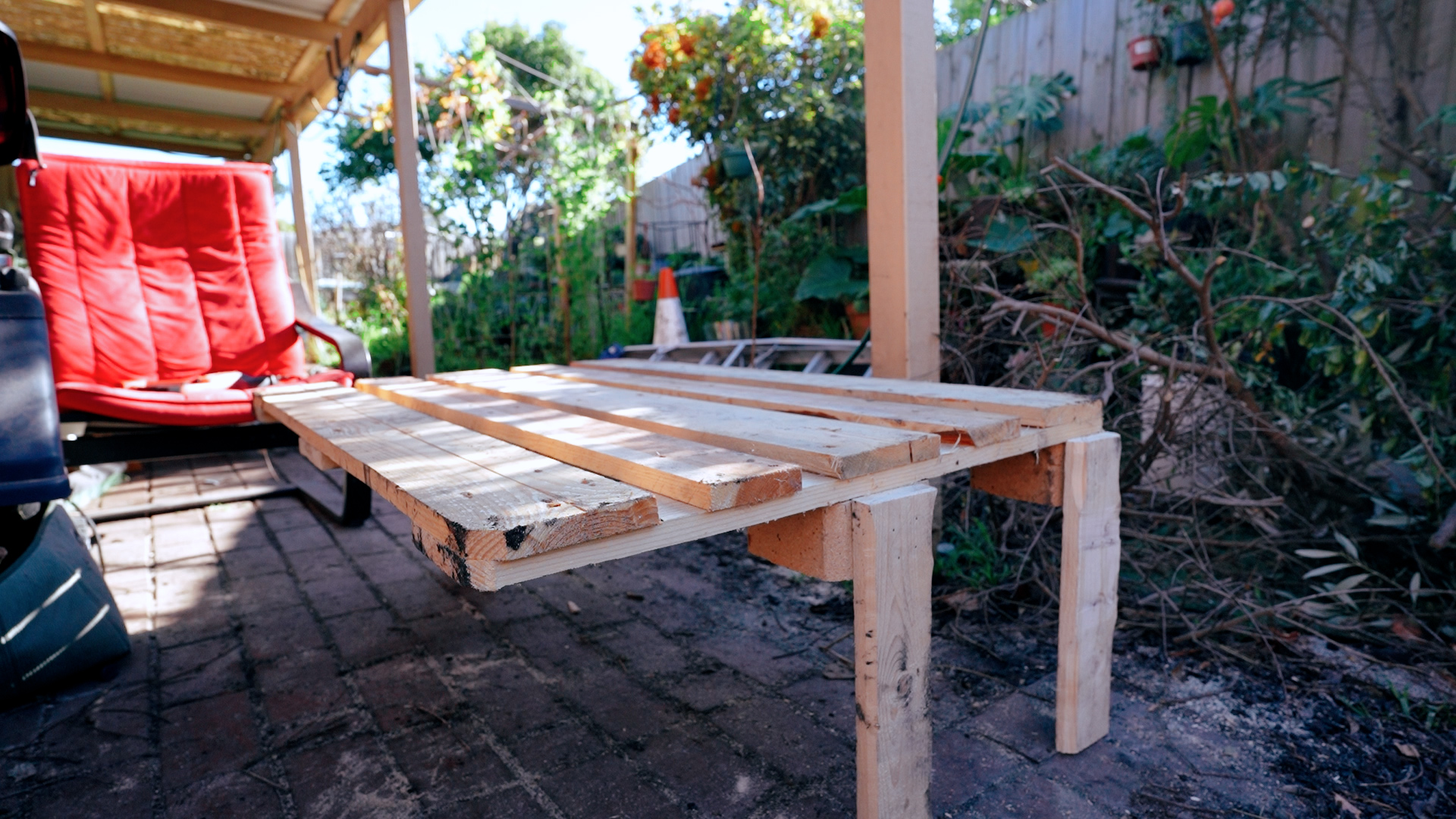
To build the second level, I dismantled an old cot frame that I had picked up for free. The frame provides sturdy supports, while the slats create an ideal platform. I’ll place cardboard over the slats before adding sugar cane mulch, allowing both air and water to circulate while supporting the growing medium.
The structure doesn’t need to be perfectly level. As long as it’s stable and strong enough to support the substrate, it’ll do the job. Once complete, the lower section will become one mushroom bed, while the upper platform will hold another. Later on, I may even add a small roof over the top to provide extra shade and protection from heavy rain.
While working, I couldn’t resist checking on the rest of the garden. The broad beans growing in one section are thriving, with several healthy plants already established. Unfortunately, the beans growing elsewhere haven’t been nearly as successful, so I decided to transplant several of them into this more productive area in the hope they’ll recover.
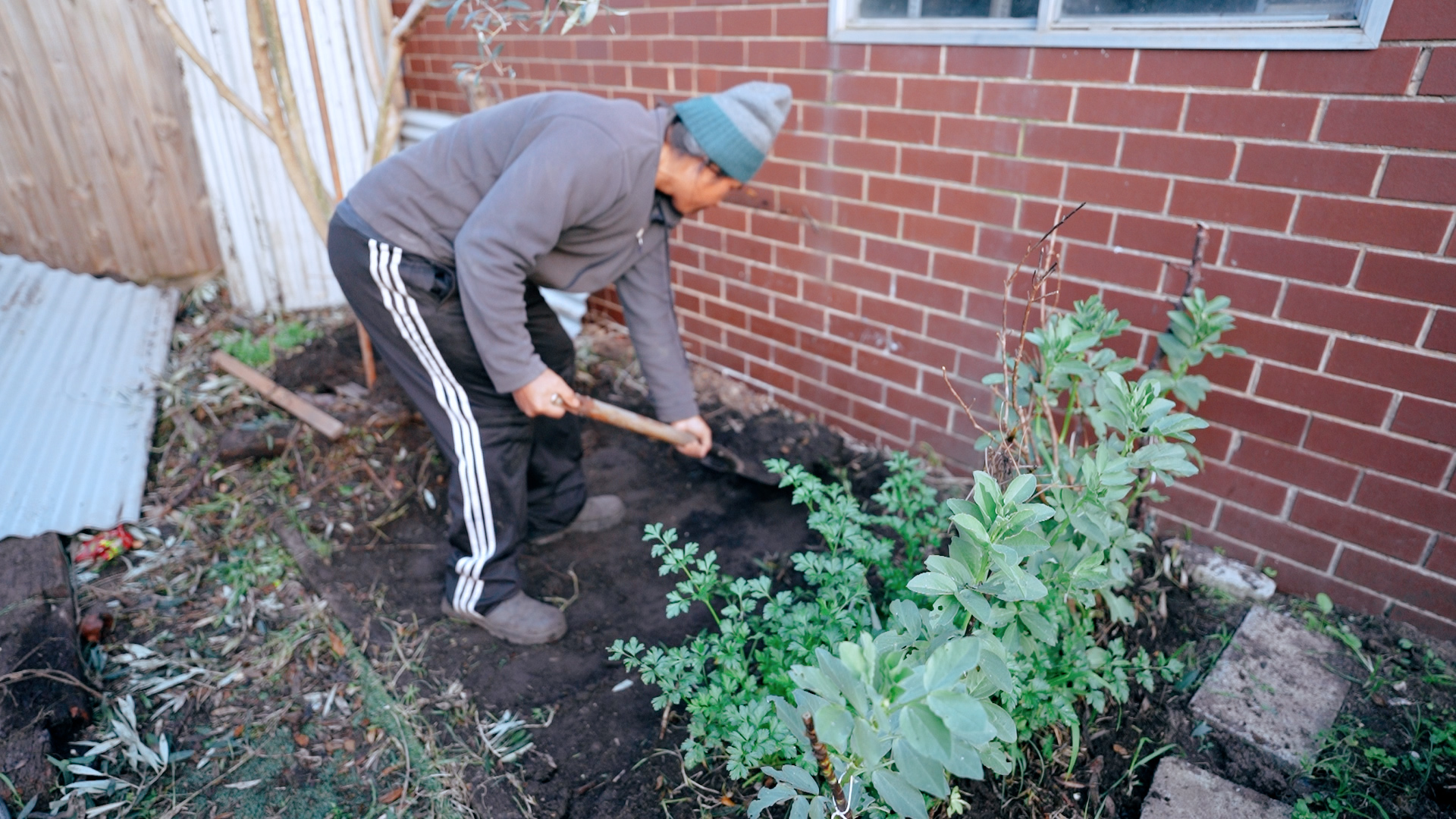
Like most gardens, there was also plenty of maintenance to do. The weeds had begun taking over after a few weeks of neglect, so I spent quite a while clearing pathways, removing unwanted growth, and spreading the rich compost from beneath the olive tree into other garden beds.
I also prepared another shady corner of the garden for future mushroom production. Surrounded by fences, the area stays cool, damp, and protected from direct sunlight—almost ideal conditions for growing pink oyster mushrooms. If my experiments prove successful, I hope to expand production into this section as well.
Not everything went perfectly, though. While digging the mushroom trench, I accidentally buried one of my partner’s purple flowering plants. Hopefully I’ll be able to rescue it once I remember exactly where it was!
By the end of the day, I was completely exhausted. After hours of digging, building, transplanting, and weeding, it was satisfying to step back and see the progress. The mushroom structure is taking shape, the garden is looking tidier, and the vision is slowly becoming reality.
To finish the day, I poured myself a glass of wine—one I’d never tried before instead of my usual budget supermarket specials. Sitting back to rest, I looked up at the evening sky and admired the moon surrounded by a beautiful glowing halo. It was the perfect way to end a productive day in the garden.
The mushroom spawn should arrive soon, and I’m looking forward to seeing whether this homemade two-level growing system can produce a steady harvest. With a little patience and a bit of luck, this experiment might be the first step towards growing enough mushrooms to keep our kitchen supplied year-round.
Visit my Youtube channel for more kitchen vegetable garden in Melbourne.


